***If you are new to podcasts here is a quick explanation. Podcasts are basically a recorded radio/audio show that can be downloaded and/or streamed to your phone, tablet, or computer. If you have an iPhone you have a podcast app on there already. Open it and search "lonesome banjo chronicles." If you click "subscribe" the latest episode will download automatically when you're connected to wifi, or you can manually download any episode whenever you like. If you have any other type of phone, download the Soundcloud app, search for LBC and you can stream from there. Hope this helps. Thanks for the support!***
In the seventh episode of the Lonesome Banjo Chronicles podcast I talk with Pattie Hopkins Kinlaw, the fiddler for the up-and-coming band Hank, Pattie, and The Current.
We talk about her passion for both learning and teaching music, how the Suzuki violin method works, what she's learned by traveling to Ireland, and of course about her new band gearing up for a busy summer of festivals.
As you'll hear, this was a fun conversation. Pattie is passionate, good natured, funny, curious, and very well spoken. The music she's creating with her new band could quickly take them into the national spotlight--it's really that good.
We listen to 4 tracks from the new album:
Losing My Mind -- 12:47
Pipop -- 27:10
All I Remember -- 36:54
Sundown -- 43:14
Download the episode from iTunes here (And subscribe in your podcast app on your phone!)
Or stream from soundcloud below
Scroll down to see their music video for "Losing My Mind"
We have two sponsors this week: Front Porch Fest: A roots music festival near Stuart VA that takes place September 2-4. Visit their site for more information and ticket purchasing.
Bluegrass Today: The top online source for up-to-date bluegrass news, reviews, and profiles.
Sign up for the daily email newsletter.
--Brian Paul Swenk
If you enjoy, please sign the email list on the left and follow: Facebook Twitter
In this podcast I talk with Robert Greer about:
Recording their new album, Southern Crescent, in south Louisiana.
How bluegrass and heavy metal are so similar.
And how their version of Springsteen's "I'm on Fire" made national news.
Featured songs are Phil Barker's "Southern Crescent," Bobby Brit's fiddle instrumental "St. Augustine," and "Tick on a Dog"
Chris Stapleton won four Academy of Country Music awards last night for his debut album Traveller; Album of the Year, New Male Vocalist, Male Vocalist, and Song of the Year for "Nobody to Blame." His domination of the night prompted the band Little Big Town to thank him for not being nominated for Vocal Group of the Year.
Along with two Grammys for Best Country Solo Performance and Best Country Album, Stapleton, is having a pretty fantastic year.
"Nobody to Blame"
Stapleton's soulful voice and genuine songwriting are being welcomed by fans throughout the world and are a welcome antidote to the cookie-cutter, over-processed, regurgitation of today's pop country.
I got to chat with Stapleton soon after he released his album Traveller last year. He was aware the album was getting great reviews, but no one had any idea that it would sweep through the country music industry awards the way it has.
Brian Swenk: I’m curious about your bluegrass history. A lot of us think that The Steeldrivers’ debut album is arguably one of the best bluegrass albums released within a couple of decades. My band covers a Steeldrivers song regularly, and we play the album on set breaks of our shows.
Chris Stapleton: Well, thank you so much for saying that. One of the best things you can do as a musician is create something that people care about, something that has staying power. A friend sent me a cell-phone video the other day of a band playing on the streets in Seattle. They were covering one of our songs, and I just thought that was so amazing, that we’ve had that much effect on people.
BS: Did you know that you would transition out of bluegrass?
CS: Well, I was a professional songwriter before I was in bluegrass. But I was always kind of a visitor, and I’m the worst bluegrass guitar player of all time (laughs). I love the music so much, and I love the subject matter and the songs — all those things. The Steeldrivers were born out of songwriting. We had all these great songs going to waste, and we decided to just start playing them. We had to figure out how to play some of them in bluegrass, since they weren’t written in that style. It seemed like the right thing to do at the time, but you just have to listen to your gut and make the right choices.
BS: When you write a song, do you have different techniques for the different music styles, or is it all the same for you?
CS: I get asked this question some, and I have to think about it a lot. For me, the process of writing a song is no different for what type of music it is for. You write a song from the best idea you have that day, whether that is pop or rock or bluegrass or folk. They’re all just songs, and they are all just blues-derived art forms. I keep that in mind, and I just try to write the best song I can on any given day. The difference of a song being blues or country or bluegrass is just the instrumentation, so I don’t try and approach it in any different way — I just try to write the song.
BS: “Traveller” just debuted at No. 2 on the country album charts. And as far as I can tell, you didn’t have any help with radio, right?
CS: That’s right. We do have a single on the radio now, but it hasn’t even cracked the top 50. But all that was kind of intentional. I asked the label if I could just put a record into the world and let us go play, and let’s see what we can build off it; and that’s how we’ve been approaching this.
BS: There are a lot of critics who are laying heavy praise on this new trend of underground country becoming popular, with people like yourself, Sturgill Simpson and Jason Isbell. Do you think country radio will catch on and start playing more of it?
CS: I’m not a fortune teller, but there’s certainly places for all types of country music. Country music radio has always been a (songwriting) home base for me, and it’s allowed me to do all these other things and play all this other type of music — even what I’m doing now. I’d certainly love it if they’d embrace me. Regardless, I’m going to keep playing shows and writing songs like I always have.
BS: I’ve noticed that I can play Luke Bryan’s version of your song, “Drink a Beer,” and there are a lot of people that won’t like it; but if I pull up a video of you singing it, they have a different reaction. Same song, but different voices and different reactions. It’s interesting how people can react differently to the exact same song.
CS: Well, there are people who like Luke singing it but don’t want to hear me sing. But as long as people are listening to music of some kind, then we’re all happy — we’re all in it together. As long as someone is selling tickets and figuring out how to make money with live shows, that pays for other people to take risks and take chances. And it identifies a need for live music out in the world. As long as people are still going out to experience live music, then I’m good.
A solo performance of "Sometimes I Cry"
--Brian Paul Swenk
If you enjoy, please share and help me spread the word about Lonesome Banjo Chronicles. Facebook Twitter
It’s hard to find a list of “Best Places To Live” that does not have Asheville, NC on it. The people, the community, the arts, the Blue Ridge Mountains: all combine to keep Asheville high on any list for people searching for an upgrade on quality-of-life. When writers scratch the surface they discover a local bluegrass music scene that draws from and gives back all of these qualities. There’s no better example of this than Asheville-based bluegrass band Town Mountain. What started as a local project has quickly became known throughout the national bluegrass music scene for heartfelt songs, crisp and clean picking, and the unmistakable South Georgia voice of Robert Greer.
Southern Crescent
Town Mountain is releasing their fifth studio album, Southern Crescent, on April 1st. The album was recorded by producer, Grammy winner, and all-around music genius Dirk Powell in his home studio in Breaux Bridge, Louisiana. The studio, dubbed The Cypress House, lives up to its name by being fully constructed with cypress planks. “We wanted to get a little South Louisiana flavor in it!” jokes Greer, Town Mountain’s lead vocalist and guitarist.
Southern Crescent has the feel and groove of a live album with professional studio recording quality. “We walked into the studio and had never met Dirk before, so it’s kinda strange, because you’re going to get after some serious work for large amounts of time,” says Greer. “We go in and he’s got 3 mics set up in this awesome room and says ‘A’right, let’s get to it!’ He wanted us to work it like we’re onstage. I sang everything live and we recorded like we were standing in his living room. It was a great experience, and we all loved working with Dirk. I came out of that experience thinking that’s how I want to record every record from here on out.” Much like the first generation bluegrass bands would start shows with a short and to-the-point blazing instrumental to grab everyone’s attention, this album comes out hot with Bobby Brit’s fiddle-led “St. Augustine.” Brit’s fiddle is consistently creative and smooth throughout the album and an absolute show-stopper in their live shows.
Phil Barker, Jesse Langlais, Bobby Brit, Robert Greer
The second track, “Ain’t Gonna Worry Me,” slows it down to feature the deep and comfy groove these guys find with each other. You’ll be excused if you don’t readily notice the drums played on this track by Dirk Powell. Powell’s ability to layer non-bluegrass instruments into this album, providing both groove and a sonic thickness without drawing explicit attention to them, is quite impressive and highlights his producer capabilities.
The title track, “Southern Crescent,” presents the voice of mandolinist Phil Barker, and is one of two songs he co-wrote with Charles Humphrey III, the bassist for Steep Canyon Rangers. (Humphrey is a prolific songwriter and is fresh off accolades for the 3rd release with his sideband Songs From The Road Band.) A hard driving train song, “Southern Crescent” features tight vocal harmonies, as well as Jesse Langlais’ unique banjo style that combines impressive Scruggs-style timing with subtle blues licks that always seem to fit perfectly within each song.
The bluegrass coming out of Asheville, NC is arguably some of the best in the world. I would even claim that in passion, picking, and individuality it rivals Nashville, TN. Balsam Range and Steep Canyon Rangers have been on the forefront of taking the Western NC sound to national and worldwide audiences, and Town Mountain is on their way to completing this trifecta of nationally known Asheville bluegrass bands. There are several prominent reasons for their rise, including songwriting, creativity, and instrumental prowess, but one that stands out is the voice of Robert Greer. His singing voice and speaking voice are nearly one and the same with a deeply southern Georgia accent that, for many of us, produces a sense of hometown-like comfort. Greer grew up singing in the Methodist church, but he didn’t start playing bluegrass guitar until he was 25. “I was tired of asking my friends to accompany me on bluegrass songs I wanted to sing, so I figured I better learn how to play,” says Greer.
The bluegrass bands that will find success in today’s musical multiverse are going to embrace their individual voices and steer towards a more genuine sound as opposed to one that is digitally polished and bland. Town Mountain is leading the way in this aspect, from their studio recordings and their live shows to the national praise they’ve received for their unique take on Springsteen’s classic hit “I’m On Fire.” Atlantic Monthly chose it as one of the “most transformative cover songs of the year” and wrote, “They dropped the synthesizer, added a banjo, a fiddle, and another singer for harmony, and made a gem.”
Southern Crescent is a near-perfect balance of tradition and young, raw energy. On the surface it’s solid bluegrass, but astute listeners will hear more. They’ll hear a hundred years of southern musical culture bubbling up and finding a common point where North Carolina, Georgia, and Louisiana meet as old friends. Town Mountain’s style and sonic footprint comes from a foundation of rhythm and groove that comes not from just loving the music (that’s too easy) but from living the music.
"Wildbird" --Track 6
Written by Phil Barker Wildbird is about feeling restless, and being an outsider. Not fitting in with your hometown, losing in love, and feeling like maybe you need a drink to get through the night. I got the idea for this song driving on the highway and every so often noticing a singular bird circling in the sky on the side of the road… not standing still, but not really going anywhere either. -- Phil Barker
The Making of Southern Crescent
Town Mountain on Tour 2016:
4/1 Fri - The Grey Eagle - Asheville, NC
4/2 Sat - Newgrass Brewing Company - Shelby, NC
4/5 Tue - Hampton Taphouse - Hampton, VA
4/6 Wed - Gypsy Sally's - Washington, DC
4/7 Thu - Lizard Lounge - Cambridge, MA
4/8 Fri - Hill Country BBQ - New York, NY
4/9 Sat - The Hobo Stage - Fredon, NJ
4/10 Sun - Tin Angel - Philadelphia, PA
4/12 Tue - Haymarket Whiskey Bar - Louisville, KY
4/13 Wed - Cosmic Charlie’s - Lexington, KY
4/14 Thu - The Station Inn - Nashville, TN
4/15 Fri - Barley's - Knoxville, TN
4/16 Sat - Waverly “Old 280” Boogie - Waverly, AL
4/17 Sun - Zydeco - Birmingham, AL
4/28 Thu - Independent Ale House - Greenville, SC
5/13 Fri - KSUT Concert Series @ Henry Strater Theatre - Durango, CO
5/14 Sat - Denver Beer Co.’s Sundrenched Music Festival - Denver, CO
5/21 Sat - The Pour House - Charleston, SC (with Peter Rowan)
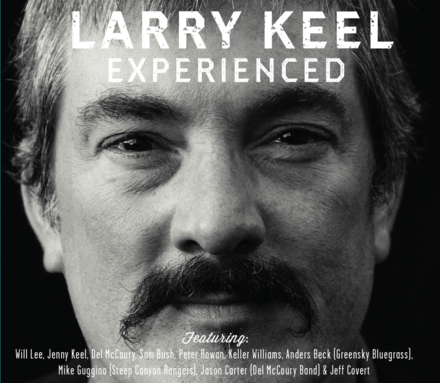
Few people can get away with describing their music as an “experience.” But then again, few words come close to actually describing the music of Larry Keel. To see Larry Keel perform is to have just that: a unique, singular experience that cannot be duplicated.
On February 26th, Larry Keel will release his 15th self-produced album, aptly titled Experienced. This album is a portrait of an artist coming full circle into his unique style and voice, but this time embracing it with a deeper sense of comfort and wisdom.
Experienced is a guest-filled album, featuring some of the biggest names in bluegrass and Americana on 5 of its 7 tracks, including Sam Bush, Del McCoury, Jason Carter, Peter Rowan, Keller Williams, Mike Guggino of Steep Canyon Rangers, and Anders Beck of Greensky Bluegrass. But the songwriting and playing from Larry, Jenny Keel (bass), and Will Lee (banjo) are so strong that it never feels like a guest album. The guests each give their respective tracks a sense of color, but even with the blazing fiddle of Bush in the album’s opening instrumental “Ripcord,” there is never a moment where you forget this is Larry’s music.
Even with the aforementioned star-power featured on Experienced, the album MVP is undoubtedly banjoist Will Lee. Larry and Will played in the cutting edge newgrass band McGraw Gap from 1990-1996 and were winners of the prestigious Telluride band competition in 1995.
Experienced starts out with the Lee-penned instrumental “Ripcord” that builds a sonic tension throughout the first half of the song and then allows each instrument to release a flurry of hard-driving bluegrass runs that take off with drag-racing intensity. Most artists wouldn’t pick an instrumental to open their album, but most artists don’t have the ability to bring so much joy out of their instruments as Larry Keel, Will Lee, and Sam Bush.
The second track, “Lil Miss,” quickly reminds you who’s in charge, as Larry’s distinctive voice hits you like a California mudslide. This track is vintage Larry Keel as the trio uses harmonies, punchy rhythms, and solos that alternate between laid back and chaotic.
There are two defining tracks for this project. The first is “Miles and Miles,” which features Larry’s soul-brother Keller Williams. The song was the title track of Larry’s 1997 release, but it takes on deeper meaning today. I mentioned to Keel that the song feels like a younger version of himself wrote a letter to the man he is today. “It does feel like that,” says Larry. “The song is the story of a traveler’s life, and knowing how much Keller Williams and I have traveled in the 20-plus years we have known each other, it seemed only fitting. Full circle, I reckon!”
The second defining song is “The Warrior,” which is written from the viewpoint of a Native American warrior and perfectly features the haunting, legendary howls of Peter Rowan. The Warrior is a seeker of truth and knowledge, a man that isn’t afraid to walk this world in search for something greater and more meaningful than himself. It is easy to see Larry Keel as this warrior, as he has spent his career following the spirit of his own unique sound.
“Fill ‘Em Up Again” is fun bluegrass romp by Will Lee that features Del McCoury, Jason Carter, and Mike Guggino that reminds us that this band comes from the world of bluegrass music and can play it as well as anybody out there.
Larry is a unique artist in that he never settled as just being a guitar wizard, as so many young virtuosos do, but instead, he created his musical identity through his own personal vision. Many artists are capable of one or the other, but few accomplish both. Experienced is not just a celebration of this accomplishment but also a retrospective embrace of it. We hear many original and unique voices in this industry, but rarely do we encounter one so incredibly genuine.
In “Miles and Miles,” Larry sings, “My truthful heart will light the darkened path.”
It would be hard to find anyone singing a line more honest than that.
Frank Solivan talks about being on the cutting edge of today's bluegrass, the history and tradition that drives him, and what's in store for the future.
Bluegrass music, like many art forms, experiences waves of both popularity and innovation, but those waves are not necessarily in sync with each other. In recent times, we've seen the O Brother Where Art Thou wave of popularity bring the music into new places, as millions of Americans heard Dan Tyminski's voice through George Clooney's face--an almost sure-fire way to bring an underground art to the mainstream, even for a brief moment. As the years moved on, and the hipness of bluegrass faded back to the core fans and pickers, we hit a spot where a little soul-searching overtook both the players and fans. We had to ask ourselves, what is the future of our music? These discussions have been both positive and vibrant, but while they were taking place, there have been a handful of bands working their way up that, I think, will show us the future of bluegrass.
One of these bands is Frank Solivan and Dirty Kitchen. A couple months ago I started listening to their three studio releases: Frank Solivan and Dirty Kitchen (2010), On the Edge (2013), and their newest release, Cold Spell (2014). These albums do not always conform to the typical traditional bluegrass sound, yet the musicianship and traditional knowledge have sprouted a very progressive sound that is being accepted in the traditional bluegrass community. This is a feat that is only impressive if you understand the insular nature of the bluegrass industry, where tradition still rules and Nickel Creek keeps getting pushed into the "Americana" category.
I caught up with Frank as he was touring with the Jerry Douglas-led band, The Earls of Leicester (pronounced "Lester"), a Grammy-winning tribute to the heyday of "Lester" Flatt And "Earl" Scruggs. Frank has just joined up with them to take the place of Tim O'Brien, who has Hot Rize commitments. The slight irony of interviewing someone on the forefront of progressiveness while touring with a traditional throwback band was amusing to both of us. But that's what makes bluegrass so beautiful: no matter how far you go, you're only one degree away from the masters who started it.
"It's been a Flatt and Scruggs bootcamp lately!" Frank jokes. "We've spent a lot of time listening, and also talking about, what their music was about and getting into the little details of Lester and Earl. We're recreating something for people to hear the blueprint of bluegrass music, the initial architecture, before it progressed into another form that we hear on the radio now."
The Earls of Leicester -- Big Black Train and Black Eyed Susie Raleigh Convention Center -- Oct 4, 2014
Frank and Dirty Kitchen are just coming off a Grammy nomination for their most recent release, Cold Spell. His band features Mike Munford on banjo, Chris Luquette on guitar, and a lifelong friend, Danny Booth, on bass. One of the first things you notice about the album is they don't stick to the typical boom-chunk, boom-chunk timing that is synonymous with bluegrass. The first track of the album Say It Isn't So, written by Frank's cousin Megan McCormick, makes the statement that this band is not afraid to try new things.
Say It Isn't So
Frank doesn't consciously arrange his songs to push any boundaries within the music. "Everyone comes together and does something that is unique to them, and we'll play as a unit. We're always working on dynamics and the feel of the song."
Dirty Kitchen seems to be that rare occurrence of experienced, master musicians who can put all ego aside and work as a single, creative unit. "Nobody tries to be in front of anyone else," Frank explains. Everyone has a chance to shine in our show and on our records, but when the song is being played, everyone is playing soft."
Chris Luquette, guitar; Mike Munford, banjo; Frank Solivan, mandolin; Danny Booth, bass.
A lot of bluegrass is written with the bluegrass sound and rhythms in mind, but for Frank it depends on what kind of mood he's in. "I hear all kinds of stuff, I hear a lot of blends too. Our common denominator is bluegrass, but I've spent a lot of time playing country music, and I've listened to a lot of funk and Beatles. Lately I've been listening to Michael Jackson and Stevie Wonder."
Frank grew up in California in a very musical family. His grandmother on his father's side played both mandolin and fiddle and participated in acrobatic vaudeville shows with her sisters. His mother's side had classical violin and cello players throughout the family. The bluegrass bug bit him early, as he got a Bill Monroe cassette tape and then started collecting Monroe 8-tracks as well. "We wore out some Bill Monroe, Flatt and Scruggs, and Elvis 8-tracks," he remembers. At 9 years old he heard Newgrass Revival for the first time, "...and they just blew my mind! I'd seen those instruments played before, but they melted my face off! I saw them doing what they wanted to do and not being constricted by what people thought."
Frank started going to the west coast bluegrass festivals at that point, and another band that really made a big impression on him was the Johnson Mountain Boys with Dudley Connell, Tom Adams, Marshall Wilborn, and the great Eddie Stubbs on fiddle. "They were contemporary in that they were using what they learned in traditional bluegrass, but then brought it to the next level with cleaner harmonies and more structure. I was thinking 'I want to be able to do that!' and make my music as good and creative as it can be."
A couple years ago, the previously mentioned "soul-searching" was kickstarted by Chris Pandolfi, the banjo player for the Infamous Stringdusters (one of the other bands who are key to the future of bluegrass). Pandolfi wrote a bluegrass manifesto of sorts, calling on the bluegrass community, and specifically the IBMA (International Bluegrass Music Association), to become more open to both younger players and bands who don't hold to the strict tradition of the music, such as Yonder Mountain String Band, Avett Bros, and Mumford and Sons. Bands who have elements of bluegrass in their music, but have reached out to much wider audiences. In typical political fashion, there was a division between the strict traditionalists and the progressives. It's no surprise where Frank falls in the debate. "I think it's common sense when it comes to accepting different types of music. We do have the so-called bluegrass industry. IBMA wants to further bluegrass music and they're doing a fairly good job lately, especially with the conventions in Raleigh. It seems the umbrella of bluegrass has gotten bigger, but there will always be people who say 'Well, that ain't bluegrass!' But you know what? It is music!"
Frank recalls Chris Thile talking about how genres aren't as clear cut anymore. Thile's description of how the clear-cut walls of genres are starting to blur, as classical musicians are starting to play with folk musicians, and jazz musicians are starting to play with bluegrass musicians, and it made a big impression on him. "I'd like to see more people trying that stuff. Traditional bluegrass isn't going anywhere. When we get into jam sessions we're going to pull out all the traditional stuff because that's common knowledge, and it's not going anywhere. The people that played in the 50's and 60's; they were pushing the boundaries of music, too. They were doing something different and it caused a stir, and people loved it. So if the music doesn't progress we won't have an industry or younger generations that listen and find their way back to those roots."
One aspect of being a leader in your field is that the amount of work it takes can almost insulate you from what's going on in the industry around you. "We're working so hard to get down the road and keep everything moving forward that it's kind of insular, so I don't see it from the outside. We've gotten some of the accolades, which is totally awesome and incredible, but it's hard to see it how the fans see it. It takes a lot of energy to run a business and keep everyone paid."
In 2013, Mike Munford was voted "Banjo Player of the Year" and guitarist Chris Luquette received the "Momentum Award" for Performance Instrumentalist. At the 2014 IBMA awards, the band received 4 nominations: Frank Solivan for Male Vocalist of the Year and Mandolin Player of the Year, Mike Munford for Banjo Player of the Year, and the entire band won Instrumental Group of the Year. Their 2014 release, Cold Spell, was nominated for a Grammy in the Bluegrass Album category. All of this is a testament to the band becoming leaders in the industry, as well as the industry accepting different song structures that are not strictly traditional.
No Life In This Town
Frank Solivan and Dirty Kitchen are what bluegrass music needs these days. They are master musicians who fully understand the history and tradition but aren't afraid to explore new sounds and concepts. We've always had people who fit that description, either outliers or people like Bela Fleck and John Hartford that by sheer force created their own styles. But we haven't necessarily had a cohesive, single unit that had the force to shift the entire bluegrass spectrum, with ease and grace, in a long time. I think we've entered into a paradigm shift with Frank and Dirty Kitchen and some of their peers, such as Infamous Stringdusters, Balsam Range and Steep Canyon Rangers. With excellent songwriting and musicianship, we'll see the rules and expectations loosen and the audiences and fan bases grow.
"M80" A banjo-driven instrumental
While the recording industry retracts each year with fewer album sales, connecting with your fan base becomes even more important. For this, Frank has a few tricks up his sleeve. Frank is known as a great chef and has spent years combining his music and food talents. "I want to bring people together and have an intimate experience. Connecting with your fans in any way you can is important. I just want to be a good human and have that come across the most. People get to a certain point and just assume you're stuck up or unapproachable, and I don't want any of that. I just want to connect with people on a level that is natural and human."
--Brian Paul Swenk
If you like the posts, please share and sign up for emails on the left.
A few days ago the song "Wagon Wheel" won a Grammy. I'm here to say that no other song has deserved a Grammy more in the past several decades, at least. It's not because it is the best song that has been written in the last 30 years, even though it is and always has been a great song. But there is no other song that has traveled such an amazing path throughout its lifetime as this one. It is the Indiana Jones of songs, traveling though the past and present, through all walks of societal and economic sub-strata of American life. From the top musical pantheon to a lowly street musician; from Mexico to London to the dirt roads of Watauga County, NC and the bedazzled belt buckles of Music City, USA; from the in-the-know Americana underground to the trodden low-hanging-fruit of paparazzi proportions in the American zeitgeist--"Wagon Wheel" has touched them all.
Forget for a moment the reality of the Grammy Awards, which mostly recognizes people who turn music into industrial algorithms for mass consumption and mass profits. Instead, imagine the ideological nugget that wants to recognize something great, something special, and something beautiful. The partial-life, death, and rebirth of "Wagon Wheel" is the antithesis of such deserved recognition.
The song began this journey as an out-take of the soundtrack to the 1973 movie, "Pat Garrett and Billy the Kid." It only survived because some bootleggers realized it was a hidden gem from Dylan that had never been recorded or performed. The chorus was fully realized, but the lyrics are unintelligible. Here it is:
After decades in the bootleggers' underground, one of the guys from Old Crow Medicine Show found a copy while visiting London and brought it back to Ketch Secor, fiddler and singer of Old Crow, who then wrote the verses.
I first met the guys from Old Crow Medicine Show in Boone, NC when they were the house band for Tweetsie Railroad, a minor tourist attraction in the mountains of NC. They were all living together, with their pet pig, in a house in rural Watauga County and were on the verge of being fired for the rank smell of unwashed clothes. It was around the same time they got an offer to come to Nashville and appear on the Grand Ole Opry, where their career took off. (A friend of mine says that they were not able to take their pig, so they killed it and ate it. This may or may not be true.)
The track "Wagon Wheel" was the last song on their debut album, and was quickly picked up as a highlight. A lot of people probably heard it for the first time from Gillian Welch and David Rawlings (Rawlings was producer of their album) when they would encore with it. As the album spread through the old-time/bluegrass/Americana music scene, people started playing it more often. For many years it was nothing more than a really great song.
Here's Old Crow's version, with its 22 million views on YouTube.
Then there was a shift, and we all noticed it. If you had a fiddle or banjo onstage people who appeared to have no interest in old-time fiddle music started coming up and asking for the "Rock Me Mama" song. To this day I still have no idea how it made that leap from underground Americana to popular culture, but it did.
The song that started as a bootleggers out-take from 1973 went to London, came back to the NC mountains, consumed the old-time/bluegrass scene, and then became a #1 country hit and #15 Billboard Hot 100 hit in 2013 deserves a Grammy. It deserves a life-time achievement award of the highest magnitude.
The frustration you see from musicians being asked to play the song is never about it being a bad song. The frustration comes from two sources, one of which is that the song is just way overplayed. The other, less noticeable, issue is that old-time and bluegrass deserve better than to be boiled down to one song. Those genres of music are lush with history and virtuosic beauty which can take a lifetime to master. They deserve more effort by the listener than to just be aware of a single song.
All that aside, "Wagon Wheel" is a beautiful song with an amazing history. I will steal a line from one of my most influential music teachers, Dr. Unsworth, when he spoke of special songs: "It's a great song. Don't you wish you had written it?"
Bluegrass music has a way of finding the deepest pockets of your heart and soul, and then fill them up with a certain sense of lightness that can only come from the bounce of the banjo, the high-lonesome fiddle, and 4-part family harmonies so powerful they seem to expand the universe by themselves. Diving head-first into this music is one of the most life-changing endeavors a person can experience. And to do it properly you must follow the timeless Yoda Wisdom:
Of the first generation Bluegrassers, there are only two still alive, and they are both banjo players: Ralph Stanley and Earl Scruggs. I believe we are a special hard-headed breed, so leave it to a banjo player to start one of the hottest debates that bluegrass music has seen in years. Chris Pandolfi, the banjo player for the top-notch band "The Infamous Stringdusters," started the discussion/debate by posting his Bluegrass Manifesto on his blog. It's a beautifully written piece that describes the marketing conundrum that the "Dusters" found themselves in after several years of hard work and well-deserved growth. The gist of it revolves around the question, "Do we continue to call ourselves bluegrass?" He then describes the thought process that forced them to decide that to continue and reach the growth they desire, they had to stop labeling themselves "bluegrass" to take part in the acoustic music revolution that is seeing acts such as The Avett Brothers, Mumford and Sons, Railroad Earth, Leftover Salmon, and Yonder Mountain String Band reach new heights for string-band based music.
Yonder Mtn String Band playing to a sold out crowd at Red Rocks.
The Avett Brothers
As his post took off through the bluegrass community with the same intensity as Chubby Wise's fiddle on Orange Blossom Special, it naturally forced the question of "What is bluegrass music?" More importantly the post also raised the tangible question, "Should the bluegrass community open itself to these acoustic bands that have obvious bluegrass roots, but yet aren't 100% Bluegrass?" And here is where the division starts. You have the big-tent progressives that want to include these bands, recognizing the windfall of new fans that could possibly push the genre out of its current stagflation; and the conservative side that thinks these bands don't deserve the recognition because they are not 100% Bluegrass, and that fans who aren't "true fans of bluegrass" will only water-down one of the most beautiful American legacies that is still alive and well (nevermind the current stagflation in the industry that counts things such as tickets sold and $ earned). See, you have to understand that bluegrass hit its peak in what we call the "O Brother Where Art Thou" period, where both semi-professional and professional bands were raking in the money, and has since fallen back to its natural state of a tightly controlled niche market where even the most talented players struggle to make a living. So the big green and purple elephant in the room of this discussion, that happens to be playing the wash-tub bass, is that it's really about money. Of course, that fact is a little too blunt for the keepers of such a beautiful art-form that has remained impressively true to its 1946 roots of the Monroe/Scruggs/Flatt/Wise/Watts super-group that started the genre. The performers who want to make a living know that we need the influx of these big-tent fans that are both passionate and willing to buy CDs and tickets, while the flame-keepers who typically work other careers and participate in Bluegrass for the sheer love and passion of it do not want to see the music morphed into something unrecognizable. You can see why it is a hot topic, as both sides have very valid arguments.
Bill Monroe, Lester Flatt, Earl Scruggs
What sets this music apart from everything else is the sense of ownership that the fans claim - rightfully, I might add - over it. Most types of music have a distinct line between the fans and the musicians, but not bluegrass. For a lot of fans the next logical step is to become a participant, and as this art is passed through the generations aurally, the only boundary for admission is desire, some practice, and a hint of musical ability which is desired but not always required. It is interesting that the same can be said for free-style rap. I've always believed that bluegrass and rap are congruent since they were both born out of an artistic expression of a specific cultural experience. In fact if you're ever at a boring dinner party just make the statement, "Bluegrass and Rap are the same thing." And things will either get more interesting, or you will be ignored for the rest of the night; you win either way, as I see it.
The last, and most important, piece of this puzzle is the IBMA (International Bluegrass Music Association). This body is the only association dedicated to the Bluegrass Industry (although others seem to be trying to get going) and unabashedly takes the role of Godfather for the music. The fans are going to enjoy the bands that they love no matter what happens, and the players are going to play their music and try to grow their bands each year, and also look up with respect and awe to Yonder Mountain and The Avetts for the huge audiences they play to all over the country. The question is will the IBMA accept these bands openly and invite their fans in to discover the genius of Blue Highway, Vincent and Daily, Michael Cleveland, etc. In my opinion, it should, as bluegrass has managed to survive the jazz of Tony Rice and David Grisman, it survived the mad genius of John Hartford, it survived the absurdity of Nickel Creek, and I'm sure it will also survive The Punch Brothers.
But survival for legacy's sake misses the point. Bluegrass is an art-form--one of the most beautiful in the world--and as a salubrious art-form, it should always move and grow and evolve. If it doesn't then it isn't art, because, like the human race, growing is the main purpose. I believe the reason that this debate hits on such a visceral nerve is because we are dealing with one of the most beautiful, truly American, art-forms that has ever been created. And it all started, as John Hartford sang, in the heart of the cross-eyed child.
Monday evening jam at the Crouse House in Sparta NC
The very fact that people are currently discussing
this is all the testament you need to understand how special Bluegrass
music is. It lives not in albums, or memories, or the fingers of our
elders, but in people's hearts. It has roots all over the world and
through different cultures, but yet it remains quintessentially
American. There's no difference between the 12-year-old who can burn
up a flat-top Martin D-28 or the old farmers who come to the weekly
"Crouse House jam-session" every Monday night in Sparta, NC. This music
is stronger than most, and will continue to endure because of its
earnest roots and the quality of people that keep the flame burning
bright. I'm honored to be a part of it.
I believe
the one point that is most easily overlooked is that musicians
will consistently look for different ways to express themselves and
these different combinations will always produce different sounds that
will not fit in any conventional labeling. The only reason Bluegrass is
called Bluegrass is because that was the band name back in 1946. It
was a brand new voice expressing itself individually and no one knew
what else to call it. Individual skills and personalities that work
together can create a brand new combination. Technically an Earl
Scruggs
banjo timing should not match up well with a Duane Allman blues timing,
yet in our band it somehow does. We are always asked how we describe
our music and we have yet to come up with a perfect answer. Appalachian
Rock is a beautiful term but it does not help someone gain a better
understanding of who we are.
As we debate what is and isn't Bluegrass
in 2011 we must also remember that one of Bill Monroe's greatest pieces
of advice to up-and-coming musicians was, "Learn to play it right, but
then go find your own voice." Jerry Garcia used to always point out
that both he and Grisman were Bluegrass/Monroe disciples, and then they
created the "Dead" style and "Dawg" style. While some work furiously to
preserve Monroe's voice of 1946, other voices will sprout up and take
off. Bill Monroe would have been 100 years old this year, and there's
probably some kid practicing in his bedroom right now that will create a
style that will survive the generations, and people will be trying to
preserve that voice in 2111. It is exciting to think about isn't it?
(I've had this piece written for well over a week now and for some reason I just could not post it, and then I found out how sick my good friend Billy Constable is and it all became clear. This post wasn't complete without the following paragraph - about one of the main people that taught all of us young Boonies what Bluegrass music really is. Thanks Billy!)
Billy Constable. More than likely playing a jaw-dropping solo.
Next week on Wednesday, October 26th we'll be playing a fundraiser in Boone, NC for Billy Constable, who played a huge role in helping all the young Boone NC bluegrass pickers play the music the right way! Billy has a large tumor on his brain and will be going into surgery soon (with no health insurance). To know Billy is to love him, and to look up to him as the archetypical Bluegrass picker. You see, a lot of us didn't catch the bluegrass bug until we got to
college. And as we were all meeting each other and learning how to play
this beautiful music, Billy Constable was there showing us the right way
to play it. He would say things like, "Leftover Salmon and String
Cheese are good bands but the heart of the music is in people like The
Stanley Brothers, Don Reno, The Kentucky Colonels, and Jim and Jesse."
He was always helping us learn new songs, but he also taught us how to
really hear the music - like the old-timers. He taught us where
to find the spirit of the music. And for that we will forever be
indebted to him. You can find updates and donate money at http://www.billyconstable.com
The next generation of Bluegrassers proving that the music is in good hands!