Thursday, April 28, 2016

I was thrown off the Bernie Sanders Revolution Train.

I've been thrown off the Bernie Sanders Revolution Train...or maybe I threw myself off.  It doesn't matter, the result is the same.

I was on this train before Sanders even thought about running for president. I was there early, when it was mostly about the Wall Street banks holding our economy hostage. Matt Taibbi from Rolling Stone was there before the rest of us with his groundbreaking expose of the power of these banks, writing:

The first thing you need to know about Goldman Sachs is that it's everywhere. The world's most powerful investment bank is a great vampire squid wrapped around the face of humanity, relentlessly jamming its blood funnel into anything that smells like money.


Then there was the Occupy Wall Street movement, the counter-weight for the increasing power of the Tea Party. But like most liberal movements, its shelf-life of hipness expired quickly, maybe because warm weather meant festival season, which is a whole lot more fun than a downtown park in NY during the summer.

But then, almost out of nowhere, came this mad-professor of progressivism. He walked the walk and talked the talk, but most importantly, someone in his staff understood that breaking his populist ideology into small soundbites and posting them on social media was a really good idea. These memes were simple, they were sharable, they were gutsy with bravado, and they were fighting for the little guy against those giant, evil corporations. They were perfect for the people who had no interest in understanding the dysfunctional mess of American politics. The Sanders revolution train lurched forward with its first "chug."


But great shifts in society are only pretty within romanticized hindsight. More often though, what should be a great, or even sizable, shift in society can be dragged down by the very internal forces driving it. Bernie Sanders is not in control of this train any longer. In fact, it won't be long until Bernie himself will be contradicting the extreme manifestations of the movement that is based around him. Bernie will make substantial efforts into bringing some of his followers back to his basic philosophy and message of progressivism. Maybe this sounds a little familiar....


I wanted to write this a month ago, maybe two. Around the time I started seeing people claim, "I'll only vote for Bernie, and if Trump becomes president then so be it!"

On an emotional level, I get it. I know what it's like to discover that one candidate that seems so pure and perfect that you'll fully commit your whole identity to them. Which in turn means you have to fight their fight with your entire being, because you're fighting for who you are. Everything becomes completely black and white, which is so emotionally rewarding and easy. No more compromise. No more empathy for anything other than this simple, universally true dogma. It feels so....damn....good. (Wait, am I talking about Trump or Sanders here?)

But the guys who set up our country were very smart. They understood the danger of both political and religious dogma. They understood that revolutions happen and need to be slowed down by messy political wrangling. They understood that this messy political wrangling was actually a good thing. They did not want to set up a system where a demagogue can work the populace into an emotional furor and break down the basic tenets of society within one election. What they did not foresee was the widespread institutional corruption and corporate plutocracy that has all but crippled our federal government.

The populist revolutions taking place with both Trump and Sanders feel like the antidote to this political paralyzation--big, common sense answers to what each side sees as the main problems. Other than diametric political ideology, the biggest difference between Trump and Sanders is that Trump is winning, and starting to win big. He has slowly turned his massive rallies into consistent wins, and Sanders has not.

Sanders' most fervid supporters don't understand this. They are not able to understand why Sanders is not winning easily by huge margins. Their own personal polling data (facebook feed) shows Sanders winning with 90% of the vote and hate for Hillary around 107% of the country. There's only one explanation for a differing reality and that is they're being cheated.

Frank Bruni wrote a great piece about this entitled The Cult of Sore Losers. He writes, "The refusal to grant victors legitimacy bundles together so much about America today: the coarseness of our discourse; the blind tribalism coloring our debates; the elevation of individualism far above common purpose; the ethos that everybody should and can feel like a winner on every day."

I've sat back and watched these "Bernie Bros" turn into the left wing version of the Tea Party. Illogical, rigid, hateful, uncompromising, conspiratorial, and the ultimate holders of dogmatic truth. 

Right about here is where I came hurling out of this speeding train.  

If the race is between Trump and Hillary, which it looks to be, then progressives have a chance to not only take the Presidency and the Senate, but there's even an outside chance to take the House as well. That is a complete game changer. This will give us a chance to strengthen the Healthcare Act, not erase it; to raise minimum wage, not get rid of it; to invest in roads, bridges, and schools, and not tax breaks for billionaires; to protect civil rights, not get rid of them. And on...and on...and on.

But most importantly, it stops the possible seating of three conservative Supreme Court judges that will dictate the direction of the country for a generation. If Trump wins, so be it? Comedian Patton Oswald had a good response to that type of thinking: That's Fucking Childish!

The Bernie Sanders Revolution of Democratic Socialism has already made a huge impact on today's political landscape. But my fear is that when he doesn't take the presidency, his followers will just check out...again. Saying: It's all rigged. It's all corrupt. It doesn't matter what we think. And they're right about all those things! But the only way to change that is to keep this Sanders momentum going in state and local races, in mid-term elections, year after year. This doesn't need to be a Bernie Sanders revolution, instead, let's make it a progressive populist revolution and accept the messy political wrangling that it will take--just like the authors and signatories of the Constitution wanted.


--Brian Paul Swenk

Facebook
Twitter

Saturday, April 23, 2016

The Beautiful Story of Dancing Man

This is just a beautiful story.   No one should ever have the joy of music taken away from them, especially by shame.

It starts with a dancing man and some bad people


Enter.....Good People

Let's do this


Pharrell Williams understands the importance of music for all of us


So does Moby


Dancing Man is found!


Dancing Man gets a dance party with many beautiful souls


Dance on Dancing Man!   


--Brian Paul Swenk

If you enjoy, please share and help me spread the word about Lonesome Banjo Chronicles.
Facebook
Twitter


Monday, April 4, 2016

Stapleton wins four ACM awards for his debut album Traveller


Chris Stapleton won four Academy of Country Music awards last night for his debut album Traveller; Album of the Year, New Male Vocalist, Male Vocalist, and Song of the Year for "Nobody to Blame." His domination of the night prompted the band Little Big Town to thank him for not being nominated for Vocal Group of the Year.

Along with two Grammys for Best Country Solo Performance and Best Country Album, Stapleton, is having a pretty fantastic year.   
"Nobody to Blame" 
 

Stapleton's soulful voice and genuine songwriting are being welcomed by fans throughout the world and are a welcome antidote to the cookie-cutter, over-processed, regurgitation of today's pop country.
I got to chat with Stapleton soon after he released his album Traveller last year. He was aware the album was getting great reviews, but no one had any idea that it would sweep through the country music industry awards the way it has. 

Brian Swenk: I’m curious about your bluegrass history. A lot of us think that The Steeldrivers’ debut album is arguably one of the best bluegrass albums released within a couple of decades. My band covers a Steeldrivers song regularly, and we play the album on set breaks of our shows.

Chris Stapleton: Well, thank you so much for saying that. One of the best things you can do as a musician is create something that people care about, something that has staying power. A friend sent me a cell-phone video the other day of a band playing on the streets in Seattle. They were covering one of our songs, and I just thought that was so amazing, that we’ve had that much effect on people.

BS: Did you know that you would transition out of bluegrass?

CS: Well, I was a professional songwriter before I was in bluegrass. But I was always kind of a visitor, and I’m the worst bluegrass guitar player of all time (laughs). I love the music so much, and I love the subject matter and the songs — all those things. The Steeldrivers were born out of songwriting. We had all these great songs going to waste, and we decided to just start playing them. We had to figure out how to play some of them in bluegrass, since they weren’t written in that style. It seemed like the right thing to do at the time, but you just have to listen to your gut and make the right choices.

BS: When you write a song, do you have different techniques for the different music styles, or is it all the same for you?

CS: I get asked this question some, and I have to think about it a lot. For me, the process of writing a song is no different for what type of music it is for. You write a song from the best idea you have that day, whether that is pop or rock or bluegrass or folk. They’re all just songs, and they are all just blues-derived art forms. I keep that in mind, and I just try to write the best song I can on any given day. The difference of a song being blues or country or bluegrass is just the instrumentation, so I don’t try and approach it in any different way — I just try to write the song.

BS: “Traveller” just debuted at No. 2 on the country album charts. And as far as I can tell, you didn’t have any help with radio, right?

CS: That’s right. We do have a single on the radio now, but it hasn’t even cracked the top 50. But all that was kind of intentional. I asked the label if I could just put a record into the world and let us go play, and let’s see what we can build off it; and that’s how we’ve been approaching this.

BS: There are a lot of critics who are laying heavy praise on this new trend of underground country becoming popular, with people like yourself, Sturgill Simpson and Jason Isbell. Do you think country radio will catch on and start playing more of it?

CS: I’m not a fortune teller, but there’s certainly places for all types of country music. Country music radio has always been a (songwriting) home base for me, and it’s allowed me to do all these other things and play all this other type of music — even what I’m doing now. I’d certainly love it if they’d embrace me. Regardless, I’m going to keep playing shows and writing songs like I always have.

BS: I’ve noticed that I can play Luke Bryan’s version of your song, “Drink a Beer,” and there are a lot of people that won’t like it; but if I pull up a video of you singing it, they have a different reaction. Same song, but different voices and different reactions. It’s interesting how people can react differently to the exact same song.

CS: Well, there are people who like Luke singing it but don’t want to hear me sing. But as long as people are listening to music of some kind, then we’re all happy — we’re all in it together. As long as someone is selling tickets and figuring out how to make money with live shows, that pays for other people to take risks and take chances. And it identifies a need for live music out in the world. As long as people are still going out to experience live music, then I’m good.

A solo performance of "Sometimes I Cry"


--Brian Paul Swenk

If you enjoy, please share and help me spread the word about Lonesome Banjo Chronicles.
Facebook
Twitter

Monday, March 28, 2016

Asheville's Town Mountain releases their new album Southern Crescent April 1st


It’s hard to find a list of “Best Places To Live” that does not have Asheville, NC on it. The people, the community, the arts, the Blue Ridge Mountains: all combine to keep Asheville high on any list for people searching for an upgrade on quality-of-life. When writers scratch the surface they discover a local bluegrass music scene that draws from and gives back all of these qualities. There’s no better example of this than Asheville-based bluegrass band Town Mountain. What started as a local project has quickly became known throughout the national bluegrass music scene for heartfelt songs, crisp and clean picking, and the unmistakable South Georgia voice of Robert Greer.
Southern Crescent

Town Mountain is releasing their fifth studio album, Southern Crescent, on April 1st. The album was recorded by producer, Grammy winner, and all-around music genius Dirk Powell in his home studio in Breaux Bridge, Louisiana. The studio, dubbed The Cypress House, lives up to its name by being fully constructed with cypress planks. “We wanted to get a little South Louisiana flavor in it!” jokes Greer, Town Mountain’s lead vocalist and guitarist.   


Southern Crescent has the feel and groove of a live album with professional studio recording quality. “We walked into the studio and had never met Dirk before, so it’s kinda strange, because you’re going to get after some serious work for large amounts of time,” says Greer. “We go in and he’s got 3 mics set up in this awesome room and says ‘A’right, let’s get to it!’   He wanted us to work it like we’re onstage. I sang everything live and we recorded like we were standing in his living room. It was a great experience, and we all loved working with Dirk. I came out of that experience thinking that’s how I want to record every record from here on out.”  

Much like the first generation bluegrass bands would start shows with a short and to-the-point blazing instrumental to grab everyone’s attention, this album comes out hot with Bobby Brit’s fiddle-led “St. Augustine.” Brit’s fiddle is consistently creative and smooth throughout the album and an absolute show-stopper in their live shows.

Phil Barker, Jesse Langlais, Bobby Brit, Robert Greer
The second track, “Ain’t Gonna Worry Me,”  slows it down to feature the deep and comfy groove these guys find with each other. You’ll be excused if you don’t readily notice the drums played on this track by Dirk Powell. Powell’s ability to layer non-bluegrass instruments into this album, providing both groove and a sonic thickness without drawing explicit attention to them, is quite impressive and highlights his producer capabilities.

The title track, “Southern Crescent,” presents the voice of mandolinist Phil Barker, and is one of two songs he co-wrote with Charles Humphrey III, the bassist for Steep Canyon Rangers. (Humphrey is a prolific songwriter and is fresh off accolades for the 3rd release with his sideband Songs From The Road Band.) A hard driving train song, “Southern Crescent” features tight vocal harmonies, as well as Jesse Langlais’ unique banjo style that combines impressive Scruggs-style timing with subtle blues licks that always seem to fit perfectly within each song.    

The bluegrass coming out of Asheville, NC is arguably some of the best in the world. I would even claim that in passion, picking, and individuality it rivals Nashville, TN. Balsam Range and Steep Canyon Rangers have been on the forefront of taking the Western NC sound to national and worldwide audiences, and Town Mountain is on their way to completing this trifecta of nationally known Asheville bluegrass bands. There are several prominent reasons for their rise, including songwriting, creativity, and instrumental prowess, but one that stands out is the voice of Robert Greer. His singing voice and speaking voice are nearly one and the same with a deeply southern Georgia accent that, for many of us, produces a sense of hometown-like comfort. Greer grew up singing in the Methodist church, but he didn’t start playing bluegrass guitar until he was 25. “I was tired of asking my friends to accompany me on bluegrass songs I wanted to sing, so I figured I better learn how to play,” says Greer.
  
The bluegrass bands that will find success in today’s musical multiverse are going to embrace their individual voices and steer towards a more genuine sound as opposed to one that is digitally polished and bland.  Town Mountain is leading the way in this aspect, from their studio recordings and their live shows to the national praise they’ve received for their unique take on Springsteen’s classic hit “I’m On Fire.” Atlantic Monthly chose it as one of the “most transformative cover songs of the year” and wrote, “They dropped the synthesizer, added a banjo, a fiddle, and another singer for harmony, and made a gem.”


Southern Crescent is a near-perfect balance of tradition and young, raw energy. On the surface it’s solid bluegrass, but astute listeners will hear more. They’ll hear a hundred years of southern musical culture bubbling up and finding a common point where North Carolina, Georgia, and Louisiana meet as old friends. Town Mountain’s style and sonic footprint comes from a foundation of rhythm and groove that comes not from just loving the music (that’s too easy) but from living the music.


"Wildbird" --Track 6

Written by Phil Barker

Wildbird is about feeling restless, and being an outsider. Not fitting in with your hometown, losing in love, and feeling like maybe you need a drink to get through the night. I got the idea for this song driving on the highway and every so often noticing a singular bird circling in the sky on the side of the road… not standing still, but not really going anywhere either. -- Phil Barker


The Making of Southern Crescent


Town Mountain on Tour 2016:
4/1 Fri - The Grey Eagle - Asheville, NC
4/2 Sat - Newgrass Brewing Company - Shelby, NC
4/5 Tue - Hampton Taphouse - Hampton, VA
4/6 Wed - Gypsy Sally's - Washington, DC
4/7 Thu - Lizard Lounge - Cambridge, MA
4/8 Fri - Hill Country BBQ - New York, NY
4/9 Sat - The Hobo Stage - Fredon, NJ
4/10 Sun - Tin Angel - Philadelphia, PA
4/12 Tue - Haymarket Whiskey Bar - Louisville, KY
4/13 Wed - Cosmic Charlie’s - Lexington, KY
4/14 Thu - The Station Inn - Nashville, TN
4/15 Fri - Barley's - Knoxville, TN
4/16 Sat - Waverly “Old 280” Boogie - Waverly, AL
4/17 Sun - Zydeco - Birmingham, AL
4/28 Thu - Independent Ale House - Greenville, SC
5/13 Fri - KSUT Concert Series @ Henry Strater Theatre - Durango, CO
5/14 Sat - Denver Beer Co.’s Sundrenched Music Festival - Denver, CO
5/21 Sat - The Pour House - Charleston, SC (with Peter Rowan)
5/27 Fri - White Squirrel Festival - Brevard, NC
5/28 Sat - Rooster Walk - Martinsville, VA
6/11 Festival of the Bluegrass - Lexington, KY
6/16 Thu - Back Porch Music Series - Durham, NC
6/23 Thu - Rudyfest 16 - Grayson, KY            
6/24 Fri - ROMP Fest - Owensboro, KY
7/23 Sat - Homegrown Music Festival - Ozark, AR


PRESS CONTACT:
Erin Scholze, Dreamspider Publicity
828-776-6248
Dreamspider@gmail.com


--Brian Paul Swenk

If you enjoy, please share and help me spread the word about Lonesome Banjo Chronicles.
Facebook
Twitter


Tuesday, March 22, 2016

"Marcia, Marcia, Marcia" The Daily Reality of Sexism

[This review does not contain spoilers. It's a fictionalized historical account--we already know what happened]

Can television be great art?

The simple answer, I believe, is "yes."

The more complex answer, considering it an extension of today's golden age of writing and acting, is also "yes."

The sixth episode of American Crime Story: The People vs OJ Simpson will most likely be the best episode of this surprisingly great series, but it could also go down as one of the best hours of television this year.

The characteristics of what makes art great depends on what form and even what derivative we consider. Writing, combined with acting, whether on TV, movies, or on stage, has the ability to change us by living, even for a brief moment, as someone else. The power to make us forget who we are and, much more importantly, what we believe is the ultimate shape-shifting transcendent time-machine. The classic 80s show Quantum Leap, where actor Scott Bakula travelled through time and inhabited other people's bodies for a short time, wasn't about time travel as much as it was about the basic act of watching stories in moving picture form. In a creatively artistic way, it was subversive meta-television.

Episode 6 of American Crime Story: The People vs OJ Simpson places us within the body of Marcia Clark, the LA County prosecutor in charge of the court trial that, at this point, is beginning to spin wildly out of control.

When the series was announced it felt like someone was dragging a bag of old garbage back inside, hoping to find something of slight value to make a quick buck. Most of us lived through this moment when, to put it mildly, a media-whore of a judge allowed the trial to be broadcast on live television and millions around the world watched in real-time how money and fame trumps our judicial system. "Do we really need to live it again?" many of us asked both vocally and subconsciously.

But there was a moment early in the series (episode 2) where Robert Kardashian is admonishing his three kids for celebrating the brief fame their father is experiencing by saying, "We are Kardashians. And in this family, being a good person and a loyal friend is more important than being famous. Fame is fleeting. It means nothing without a virtuous heart." These words, said by the one member of the defense team that suffers from both a conscience and a blinding devotion to his long-time friend OJ, marks a definitive moment both for the series and for American culture, as we all know the kids will become famous for the very act of just being famous.

What this series does is not only force us to confront our celebrity-obsessed culture but finds a point in history that shows its birth after several decades of media-based commercialism pregnancy. If we each had the power to travel back in time and watch ourselves make major mistakes, would we? Or more realistically, could we look away?

But what stands out about episode 6, titled "Marcia, Marcia, Marcia," is not what it tells us about ourselves 20 years ago, but what it tells us about ourselves today. By showing what Marcia Clark went through during this trial we, in turn, see what countless women go through on a daily basis. It's more than just eye-opening. As the episode piles on constant body/appearance-shaming, snarky sexist comments, and public humiliations by the defense and two ex-husbands, you don't merely feel sorry for her; if you have any sense of empathy, you feel outraged.


Clark was known as a great prosecutor before this moment, winning the vast majority of cases that went to trial. As the country became fixated on the daily proceedings, thanks to a live TV feed, the papers, tabloids and newly burgeoning cable news industry saw the potential for an unexpected goldmine of ratings. Clark became an easy target for a simple reason few of us want to admit: because she was the only woman in the room.

What we see as the episode unfolds is unacceptable. There's just no other way to put it. Clark is trying to make it in a man's world at the high ranks of the American judicial system, and she's reminded on a near daily basis that she doesn't belong to the "good ole boys club." Even as she's checking out at a grocery store, the cashier picks up a box of tampons and says, "Gonna be a rough week for the defense!"

She has to stop the trial because she doesn't have child-care for the evening. Her ex-husband releases a nude picture of her taken on vacation many years ago. She becomes reactionary to the constant media snipping about her appearance and tries new hairstyles, only to get laughed at walking into the court room. As the daily tabloid headlines mocking her appearance start to pile up, her boss makes a point to tell her how disgusted he is with the headlines as well....but that he knows a few good stylists, too.

What's infuriating is that MEN. DON'T. GO. THROUGH. THIS.

(As highlighted by Australian news anchor Karl Stefanovic here.)

In an episode focused on double standards, the most striking moment is when Johnny Cochran is confronted by the press about domestic abuse allegations in his past. Clark stands to the side, hoping to see him experience some of the same personal embarrassment, only to watch him confidently shut them down for bringing up such impertinent history while a man is on trial for a brutal double murder, and snidely walking away. You don't have to be female to understand the emotion in her face afterwards. (Kudos to Sarah Paulson)

The beauty of this episode is that it quickly and coherently tears through any attempt to dismiss her experience as general weakness and ultra-PC sensitivities. Actress Sarah Paulson, who will most likely be recognized at the end-of-the-year awards ceremonies for this portrayal, explained to Terry Gross how her opinion of Clark changed as she approached the project. "My impressions of her now, after portraying her, are incredibly, vastly different," Paulson says. "I now hold her to be a very competent, complicated, strong, deep-thinking, quick-witted, quick-draw, wonderful creature."

Is it fair to call an hour of historical fictionalized television "art" or even "great art?" Some will argue no. But art is intertwined with humanities in academia for a reason; they both aim to teach us who we are, how we see ourselves, and even, at times, how we fool ourselves. "Marcia, Marcia, Marcia," does just that, and it does it remarkably well.

--Brian Paul Swenk

If you enjoy, please share and help me spread the word about Lonesome Banjo Chronicles.
Facebook
Twitter


Wednesday, February 24, 2016

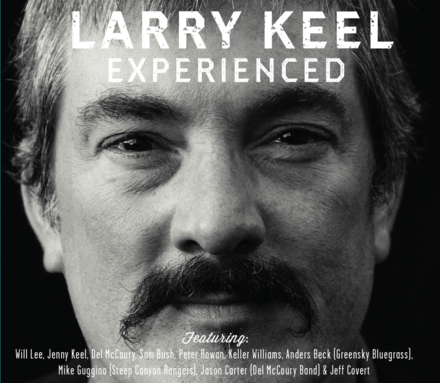
Larry Keel--Experienced.

Few people can get away with describing their music as an “experience.” But then again, few words come close to actually describing the music of Larry Keel. To see Larry Keel perform is to have just that: a unique, singular experience that cannot be duplicated.   


On February 26th, Larry Keel will release his 15th self-produced album, aptly titled Experienced. This album is a portrait of an artist coming full circle into his unique style and voice, but this time embracing it with a deeper sense of comfort and wisdom.  


Experienced is a guest-filled album, featuring some of the biggest names in bluegrass and Americana on 5 of its 7 tracks, including Sam Bush, Del McCoury, Jason Carter, Peter Rowan, Keller Williams, Mike Guggino of Steep Canyon Rangers, and Anders Beck of Greensky Bluegrass. But the songwriting and playing from Larry, Jenny Keel (bass), and Will Lee (banjo) are so strong that it never feels like a guest album. The guests each give their respective tracks a sense of color, but even with the blazing fiddle of Bush in the album’s opening instrumental “Ripcord,”  there is never a moment where you forget this is Larry’s music.


Even with the aforementioned star-power featured on Experienced, the album MVP is undoubtedly banjoist Will Lee. Larry and Will played in the cutting edge newgrass band McGraw Gap from 1990-1996 and were winners of the prestigious Telluride band competition in 1995.
larry.png


Experienced starts out with the Lee-penned instrumental “Ripcord” that builds a sonic tension throughout the first half of the song and then allows each instrument to release a flurry of hard-driving bluegrass runs that take off with drag-racing intensity. Most artists wouldn’t pick an instrumental to open their album, but most artists don’t have the ability to bring so much joy out of their instruments as Larry Keel, Will Lee, and Sam Bush.  


The second track, “Lil Miss,” quickly reminds you who’s in charge, as Larry’s distinctive voice hits you like a California mudslide. This track is vintage Larry Keel as the trio uses harmonies, punchy rhythms, and solos that alternate between laid back and chaotic.   


There are two defining tracks for this project. The first is “Miles and Miles,” which features Larry’s soul-brother Keller Williams. The song was the title track of Larry’s 1997 release, but it takes on deeper meaning today. I mentioned to Keel that the song feels like a younger version of himself wrote a letter to the man he is today. “It does feel like that,” says Larry. “The song is the story of a traveler’s life, and knowing how much Keller Williams and I have traveled in the 20-plus years we have known each other, it seemed only fitting. Full circle, I reckon!”


The second defining song is “The Warrior,” which is written from the viewpoint of a Native American warrior and perfectly features the haunting, legendary howls of Peter Rowan. The Warrior is a seeker of truth and knowledge, a man that isn’t afraid to walk this world in search for something greater and more meaningful than himself. It is easy to see Larry Keel as this warrior, as he has spent his career following the spirit of his own unique sound.  


“Fill ‘Em Up Again” is fun bluegrass romp by Will Lee that features Del McCoury, Jason Carter, and Mike Guggino that reminds us that this band comes from the world of bluegrass music and can play it as well as anybody out there.      


Larry is a unique artist in that he never settled as just being a guitar wizard, as so many young virtuosos do, but instead, he created his musical identity through his own personal vision. Many artists are capable of one or the other, but few accomplish both. Experienced is not just a celebration of this accomplishment but also a retrospective embrace of it. We hear many original and unique voices in this industry, but rarely do we encounter one so incredibly genuine.   


In “Miles and Miles,” Larry sings, “My truthful heart will light the darkened path.”


It would be hard to find anyone singing a line more honest than that.


Keep up with The Larry Keel Experience:
www.larrykeel.com
www.twitter.com/LarryKeel

--Brian Paul Swenk

Keep up with me here:

If you like the posts, please share and sign up for emails on the left.

Monday, January 11, 2016

The Life of David Bowie: A Rebel's Rebel

Of all the tributes appearing about David Bowie, no other will extract the essence of rock-and-roll for the disaffected and oppressed more than Mazlar Bahari has here.

"For so many of us who grew up in the Islamic Republic of Iran in the 1980s, David Bowie was an inspiration and a refuge from a claustrophobic environment. At a time when you could be lashed or go to jail for owning an audio cassette of western music, we would search all over Tehran for a Bowie album. We listened to anything we could find, from Space Oddity to Young Americans, over and over again. We watched The Man Who Fell to Earth a dozen times without understanding the plot or dialogue. We begged our friends and relatives in the West to send us his latest albums and the most recent books about him.

I will never forget the sadistic school principal who confiscated my David Bowie book, insulting and slapping me around for bringing a book about a cross dresser who kissed other men to school. "Do you want to be a faggot like him!? Don't you know we kill the fags in Iran?" he said as he tore the book into pieces, throwing the shreds in my face. "Should I send you to the Revolutionary Guards and tell them you're a fag!? Do you want to know what they will do to you!?"

I was trembling with fear. It was 1983, and many innocent people had died by the hands of the regime for crimes less than having a picture of Bowie and Lou Reed kissing each other. My only solace was reciting the words of Five Years, which I used to listen to every morning.

Pushing through the market square
So many mothers sighing
News had just come over,
We had five years left to cry in


In those dark days of 1980s Iran, rock music was a glimmer of hope for many of us. David Bowie represented many different identities and personas in the West, but to us in Iran he was a cry against indoctrination and the prejudices that surrounded us. He was among one of our saviors. He transcended music, film and fashion. Things that define our identities and make us human.

David Bowie never dies." --Mazlar Bahari

Bowie would never be placed high on a list of influential musicians throughout the south as he pushed the limits of artistic expression way past the comfort level of bible-belt sensibility. In spite of that--or actually because of that--it's worth some time to look back at his life and his art and how he merged the two so easily and successfully.   

Most Americans know David Bowie for two things; the Ziggy Stardust character and the song Let's Dance. But in fact he was a prodigious writer who's constant need for creative expression was both his strength and weakness. A young David Bowie first wanted to blend his two favorite things, rock and roll and musicals, into a singular concept, believing it to be the next artistic evolutionary step for rock music. If there were three steps from conceptualization to realization on this grand project he achieved two of them; the artistic concept and the music that came out as The Rise and Fall of Ziggy Stardust and the Spiders from Mars. The final step of creating the theatrical play was never taken. He had already moved on to other ideas and couldn't stand the thought of continuing as the character Ziggy Stardust. This constant movement left us with multitudes of material by Bowie, some of which never fully realized. 


You've got your mother in a whirl
She's not sure if you're a boy or a girl
Hey babe, your hair's alright
Hey babe, let's go out tonight
You like me, and I like it all
We like dancing and we look divine
You love bands when they're playing hard
You want more and you want it fast
They put you down, they say I'm wrong
You tacky thing, you put them on

--Rebel Rebel

The phrase "ahead of his time" is so overused that it has all but lost any meaning. But for this moment in time, as we reflect on the life of David Bowie, we see a person that deserves the label. Bowie was a rebel's rebel. When the counterculture was the blue-jean and t-shirt wearing all-natural hippy, Bowie was playing five moves ahead. "We were creating the 21st century in 1971," said Bowie to Terry Gross on NPR.

Bowie foresaw more than just artistic trends throughout his life. He correctly predicted the downfall of recorded music revenues as we moved towards the digital streaming age, and attempted to stay ahead of the collapse with off-the-wall ideas such as selling "Bowie Bonds." It was 1997.

"You'd better be prepared for doing a lot of touring because that's really the only unique situation that's going to be left," Bowie said. "It's terribly exciting. But on the other hand it doesn't matter if you think it's exciting or not; it's what's going to happen."

There's a starman waiting in the sky
He'd like to come and meet us
But he thinks he'd blow our minds
There's a starman waiting in the sky
He's told us not to blow it
'Cause he knows it's all worthwhile
He told me
Let the children lose it
Let the children use it
Let all the children boogie

--Starman

Combining post-modernism with artistic hyperactivity, Bowie and his cohorts lived the philosophy of "Everything is rubbish, and rubbish is beautiful." If only everyone's rubbish could be anywhere near as beautiful. Thanks for staying five moves ahead Mr Bowie.   

The first music video ever produced in space was of course a David Bowie song. 


--Brian Paul Swenk

Keep up with me here:

If you like the posts, please share and sign up for emails on the left.